Hematology billing spans complex infusion hierarchies, high-cost factor replacement products, blood disorder management, and bone marrow procedures—each with unique coding rules that demand specialized expertise. VeriMedix ensures your hematology practice captures every billable service accurately and compliantly.
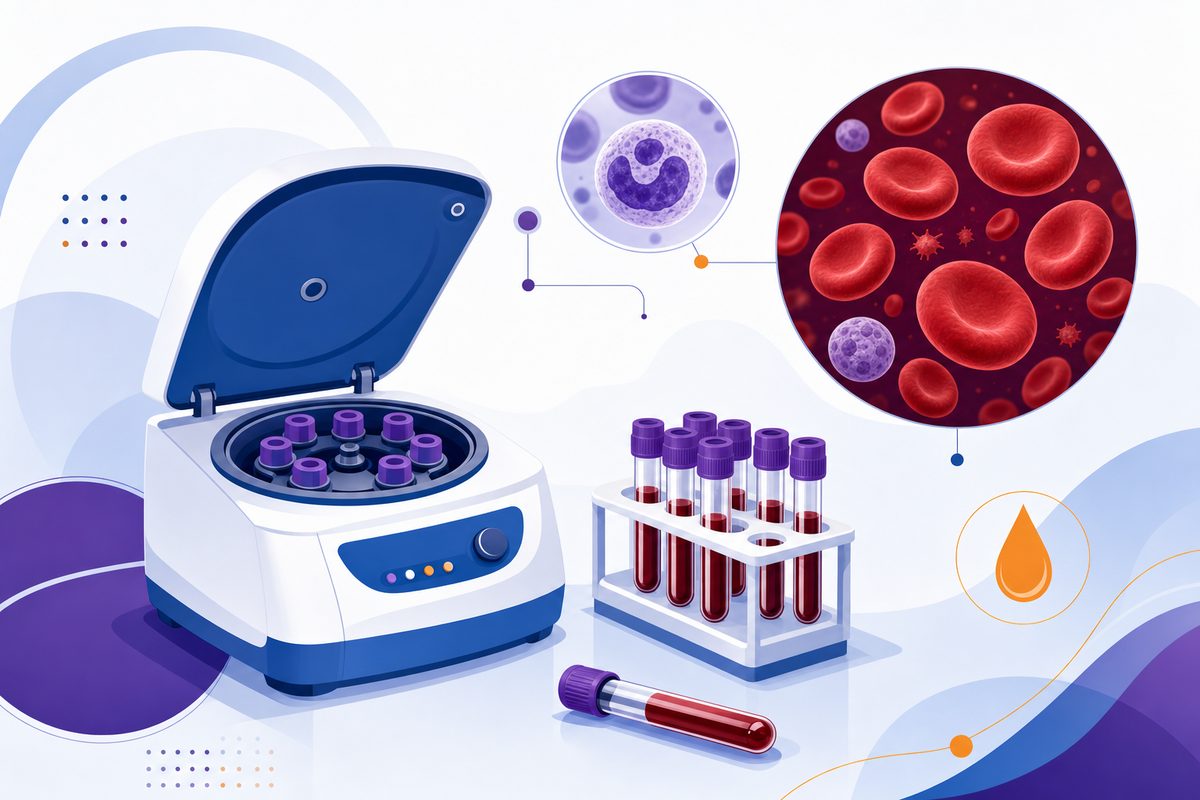
Hematology encompasses a wide range of conditions—anemia, coagulopathies, hemophilia, thrombocytopenia, myeloproliferative disorders, lymphoma, and leukemia—that generate diverse and often high-dollar billing scenarios. Evaluation and management coding follows standard AMA 2021 MDM guidelines, but the clinical complexity of patients on anticoagulation therapy (e.g., warfarin management, heparin bridging), those receiving chronic transfusion support, and those with hemophilia on prophylactic factor replacement routinely supports 99214–99215 visit levels. ICD-10-CM coding precision is critical: D50–D53 for nutritional anemias, D55–D59 for hemolytic anemias (including D57 series for sickle cell disease with crisis specificity), D65–D68 for coagulation defects, D69 for purpura and thrombocytopenic conditions, and C81–C96 for lymphoid/hematopoietic malignancies. Using unspecified codes when the chart supports greater specificity is a leading cause of medical necessity denials.
Non-chemotherapy drug infusion billing uses the 96360–96379 hierarchy. The framework requires that the primary service be identified: 96365 covers the initial hour of an IV infusion of a therapeutic, prophylactic, or diagnostic drug; 96366 adds each additional hour; 96367 covers sequential infusion of a different drug/substance; and 96368 covers concurrent infusion. Hydration (96360) is separately billable only when provided independent of the infusion service and for a clinical reason beyond line maintenance. Injection codes (96372 for SC/IM, 96374 for IV push) follow distinct rules: an IV push must be a drug administered via direct injection over 15 minutes or fewer into a line. For hemophilia patients, factor concentrates (e.g., J7185 for Factor VIII, J7190/J7192 for Factor IX products, J7187 for von Willebrand factor-Factor VIII complex) are high-cost HCPCS codes that require NDC reporting on Medicare claims and are subject to the same JW/JZ modifier requirements as oncology drugs effective 2023.
Bone marrow procedures—aspiration (85095), biopsy (85102), and combination (85095 + 85102)—are frequently performed in hematology offices and outpatient settings. Bone marrow transplant-related services are primarily hospital-based and use complex DRG coding, but pre-transplant evaluation, donor workup, and post-transplant outpatient management all generate billable professional claims. Anticoagulation clinic services (CPT 99211 for INR checks managed by nursing staff under physician supervision, or 93793 for anticoagulation management using algorithm-based dosing) represent a high-volume, recurring revenue stream that is frequently undercoded. Therapeutic phlebotomy (99195) for hemochromatosis or polycythemia vera requires a physician order and, under Medicare, is covered only when medically necessary with appropriate ICD-10 documentation (e.g., D45 for polycythemia vera, E83.110 for hereditary hemochromatosis).
Below are commonly billed codes our certified coders manage for hematology practices. Always confirm payer-specific coverage and current code values.
| Code | Description | Billing note |
|---|---|---|
96365 | Intravenous infusion, therapeutic/prophylactic/diagnostic; initial up to 1 hour | Primary infusion code for non-chemotherapy drugs; document drug, route, start/stop time |
96366 | IV infusion, therapeutic; each additional hour | Add-on to 96365; requires continuous nursing presence; bill per additional hour (partial hours ≥30 min round up) |
96367 | IV infusion; additional sequential infusion of a new drug/substance, up to 1 hour | Different drug given after first drug completes; one unit per drug; add 96368 for concurrent |
96372 | Therapeutic/prophylactic/diagnostic injection; subcutaneous or intramuscular | Used for IM/SC hematology drugs (e.g., B12 injections for pernicious anemia) |
J7185 | Injection, Factor VIII (antihemophilic factor, human), per IU | Report NDC; JW/JZ modifier required on Medicare; prior auth required; dose in IU |
J7190 | Factor IX (antihemophilic factor, human), per IU | Hemophilia B; multiple recombinant products have distinct codes (J7192, J7193 for recombinant Factor IX) |
85095 | Bone marrow aspiration, single site | Can be billed with 85102 (biopsy) on same date when both performed; use modifier -59 or anatomic modifier if same session |
85102 | Bone marrow biopsy, unilateral | Separate from aspiration; pathology interpretation billed separately by pathologist (88305) |
99195 | Phlebotomy, therapeutic (separate procedure) | For polycythemia vera (D45), hemochromatosis (E83.110); Medicare Part B covers when medically necessary; document volume removed |
Our standard operating procedures for hematology revenue cycle management — the step-by-step workflow we follow on every claim:
These are the issues we see most often in hematology billing — and exactly how we resolve them:
Billing 96365 for each drug in a multi-drug infusion instead of using 96367 for sequential drugs inflates administration codes and triggers NCCI edits. Fix: Train coders on the CMS infusion billing hierarchy: one primary code (96365), 96366 for additional hours of the same drug, 96367 for each new sequential drug, 96368 for concurrent. Conduct quarterly coding audits of multi-drug infusion encounters.
IVIG (J1459, J1569) requires documented diagnosis meeting payer LCD/NCD criteria (e.g., primary immunodeficiency, immune thrombocytopenic purpura, CIDP). Generic or unspecified ICD-10 codes trigger denials. Fix: Map all IVIG orders to specific ICD-10 diagnoses in the authorization request and on the claim; attach clinical notes confirming diagnosis criteria; appeal with physician attestation and relevant lab results.
Medicare requires NDC on all separately payable single-dose drug claims, including factor concentrates. Missing NDC triggers claim rejection or denial. Fix: Implement a nursing infusion intake form that captures NDC from the vial at administration; integrate NDC into the billing workflow so it auto-populates from the infusion record.
Many practices bill 99211 for every INR check regardless of clinical complexity. CPT 93793 (anticoagulation management service) may be appropriate for algorithm-based warfarin dosing with patient contact, and 99213–99214 may apply when a physician actively reviews results and adjusts therapy. Fix: Clarify the service rendered at each anticoagulation visit; document physician involvement and decision-making to support the appropriate code level.
Payers may bundle 85095 and 85102 when billed together without a modifier, reimbursing only one. Fix: Append modifier -59 (or anatomic site modifier if applicable) to the secondary procedure to indicate it is a distinct service; document each procedure separately in the operative note with separate instrument use and site notation.
Verimedix works inside the systems hematology practices already use, including:
Bill 96365 for the first hour and 96366 for each additional hour (up to 3 additional hours = 3 units of 96366). Include the J-code for the specific IVIG product (J1459 for immune globulin, carimune; J1569 for immune globulin, gammagard liquid; others vary by product) with NDC. Attach modifier -JW or -JZ for Medicare waste reporting. Document start/stop times and nursing infusion notes.
Yes, if a significant and separately identifiable E/M service was performed. Append modifier -25 to the E/M code. Document the E/M note separately from the phlebotomy order. Medicare Part B covers 99195 when medically necessary (e.g., polycythemia vera, hemochromatosis); routine venipuncture (36415) is not a substitute for therapeutic phlebotomy.
D57.00 (Hb-SS with crisis, unspecified), D57.01 (with acute chest syndrome), D57.02 (with splenic sequestration), D57.09 (with other crisis), D57.1 (Hb-SS without crisis), and the D57.2–D57.8 series for other sickle cell variants. Specificity matters for prior authorization, case management, and value-based care reporting.
Post-transplant outpatient follow-up uses standard E/M codes (99213–99215) with appropriate ICD-10 diagnoses: Z94.81 (bone marrow transplant status), D89.810–D89.813 for graft-versus-host disease stages, and the underlying malignancy in remission (e.g., C91.00 for CLL in remission). Document graft vs. host disease monitoring, medication adjustments, and infectious prophylaxis review.
For home self-administration, factor concentrates are dispensed by a specialty pharmacy and billed under DME/Part B pharmacy benefits—not by the physician practice. The practice bills for E/M visits, infusion training (96365 or appropriate education code), and factor administration when performed in the office. Hemophilia treatment centers (HTCs) have distinct billing rules under their comprehensive care agreements.
Submit a PA with: diagnosis specificity (hemophilia type and inhibitor status), current factor level labs, bleeding episode log, prior treatment failures (if step therapy required), and the attending physician's letter of medical necessity. Request peer-to-peer review immediately on denial. For inhibitor patients requiring bypassing agents (J7198 anti-inhibitor coagulant complex, J7189 Factor VIIa), emphasize clinical urgency and document inhibitor titer. State external appeals are available if internal appeals fail.
Verimedix handles the entire hematology revenue cycle — coding, submission, denials, and A/R — so your team can focus on patients.